YOUTUBE AUTOMATION: How to Avoid Copyright Strikes on Automated Channels
The complete playbook for building a faceless, automated YouTube channel without triggering the copyright system that can destroy it overnight.
By Michael Spark · April 3, 2026
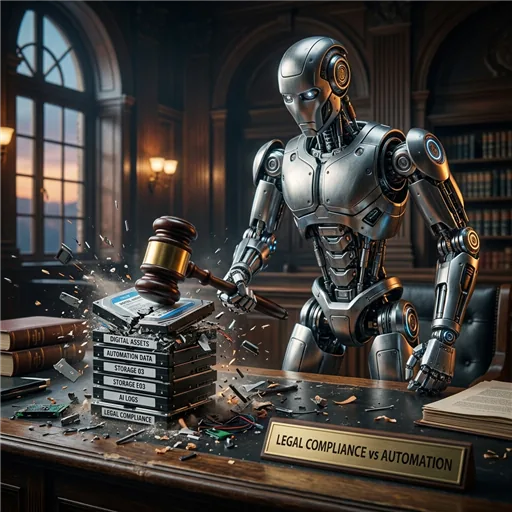
YouTube automation — building channels that publish consistently without a traditional on-camera host — is one of the most lucrative business models on the platform in 2026. It is also one of the most legally exposed. The same production workflow that allows a single operator to run multiple channels simultaneously creates a systematic risk: every piece of outsourced or repurposed content is a potential copyright liability, and a single unmanaged strike can erase months of monetization progress in hours.
Copyright is not an abstract legal concern for automation channel operators — it is an operational risk that must be engineered out of the production workflow from day one. This article explains precisely how YouTube's copyright system works, identifies every stage of the automation workflow where liability enters, and provides the exact protocols successful operators use to build channels that scale without accumulating the strikes that ultimately end them.
What YouTube Automation Actually Is
YouTube automation, in its modern form, refers to the practice of producing and publishing video content through a delegated or systematised workflow — typically using a combination of freelance contributors, AI production tools, and templated processes — without the channel owner appearing on camera or performing the creative work personally. The channel owner functions as a publisher and business operator rather than a performer.
Common automation channel formats include narrated documentary-style explainers, AI voiceover educational content, listicle and "top 10" formats, financial and business news commentary, and niche-specific information channels covering topics from history to personal finance to true crime. What unifies them is the production model: scripting, voiceover, editing, and publishing are handled by a repeatable system rather than a solo creator.
The copyright risk specific to automation channels arises directly from this model. When content production is delegated or systematised, the creator loses direct line-of-sight over what source material is being incorporated into each video. Freelance scriptwriters pull quotes from copyrighted books. Editors source B-roll from unlicensed footage libraries. Voiceover artists record scripts that contain unattributed paraphrasing. Each of these is a potential copyright trigger — and on a channel publishing multiple videos per week, the cumulative exposure compounds rapidly.
How YouTube's Copyright System Actually Works
Understanding the mechanics of YouTube's copyright enforcement is not optional for automation operators — it is the foundation of every risk-management decision in the production workflow. The system operates through two completely separate mechanisms, each with different consequences and different responses.
Content ID: The Automated Claim System
Content ID is YouTube's automated copyright detection infrastructure. Rights holders — record labels, film studios, publishers, and individual creators who meet YouTube's eligibility criteria — upload reference files of their copyrighted material to the Content ID database. YouTube's systems scan every uploaded video against those reference files. When a match is detected, the rights holder's pre-configured policy is automatically applied to the flagged video.
A Content ID match results in one of three automatic outcomes, entirely at the rights holder's discretion:
| Rights Holder Action | What Happens to Your Video | Effect on Your Channel |
|---|---|---|
| Monetize | Video stays up. Ads run. Revenue is redirected to the rights holder. | No strike. No removal. You earn nothing from that video. |
| Track | Video stays up. YouTube provides the rights holder with viewership analytics. | No strike. No removal. Revenue unaffected in most cases. |
| Block | Video is made unviewable — either globally or in specific countries. | No strike. Video blocked. Potential loss of watch hours and revenue. |
Critical distinction: A Content ID claim is not a copyright strike. It does not count toward the three-strike limit that results in channel termination. It does not affect your standing in the YouTube Partner Program. However, a sustained pattern of monetized Content ID claims across an automation channel can silently drain a significant share of ad revenue — in some cases diverting the majority of income from high-view videos to rights holders indefinitely.
Manual Copyright Strikes: The Existential Threat
A manual copyright strike is fundamentally different from a Content ID claim. It is filed directly by a rights holder — or their legal representative — using YouTube's copyright removal request process, asserting that a specific video infringes their copyright and requesting its removal. Manual strikes carry severe, time-limited consequences for the channel as a whole.
| Strike Count | Consequence | Duration |
|---|---|---|
| Strike 1 | Warning issued. Copyright School required. Certain features temporarily restricted. | Strike expires after 90 days if no further violations. |
| Strike 2 | Two-week posting restriction. Channel cannot upload, stream, or post Stories. | Strike expires after 90 days from the date of issue. |
| Strike 3 | Channel permanently terminated. All videos removed. All revenue withheld. | Permanent. No automatic recovery path. |
For a monetized automation channel, three strikes represent total loss: the channel, its video library, its subscriber base, its watch-hour history, and all pending AdSense payments. The asymmetry between the risk and the reward of cutting corners on licensed content is extreme — and yet it is a lesson thousands of operators learn only after their channel is gone.
The Four Copyright Danger Zones in the Automation Workflow
Copyright liability in an automation channel does not arrive randomly. It enters at predictable, identifiable points in the production process. Operators who understand these danger zones can build systematic safeguards at each one rather than reacting to claims after the damage is done.
Danger Zone 1: Background Music
Music is the leading source of Content ID claims on automation channels. Commercial tracks — including songs from Spotify playlists, mainstream artists, and even many "royalty-free" libraries with ambiguous licensing terms — are heavily registered in Content ID. A single unlicensed track used across 30 videos can trigger 30 simultaneous claims, silently redirecting revenue from every one of them.
Danger Zone 2: B-Roll and Stock Footage
Outsourced editors frequently source B-roll from wherever it is easiest to find — which often means YouTube itself, news broadcasts, or stock sites with licensing terms that do not permit commercial use. News footage is particularly dangerous: major broadcasters have aggressive Content ID registrations, and even brief clips of a few seconds can trigger a channel-wide block in certain territories.
Danger Zone 3: Scripts and Written Content
Freelance scriptwriters working under tight deadlines often lift passages — sometimes verbatim, sometimes lightly paraphrased — from books, articles, Wikipedia, and other online sources. While text copyright rarely triggers Content ID, it creates exposure to manual DMCA takedown requests, particularly from academic publishers and news organisations that actively monitor for unlicensed content reproduction.
Danger Zone 4: Thumbnails and Imagery
Automation channels that outsource thumbnail design to low-cost freelancers frequently end up with thumbnails built from Getty Images watermarks removed, unlicensed celebrity photographs, or movie stills. While thumbnail copyright claims are less common than video claims, they do occur — and a pattern of infringing thumbnails is a direct signal to human reviewers during YPP applications and channel audits.
Music: The Biggest Copyright Risk — and How to Eliminate It
Background music is responsible for the majority of Content ID claims on automation channels, and it is also the most fully solvable problem in the entire copyright risk landscape. There is no legitimate operational reason for a well-run automation channel to use unlicensed music — the alternatives are comprehensive, affordable, and, in many cases, entirely free.
YouTube Audio Library
YouTube's own Audio Library provides hundreds of tracks and thousands of sound effects that are free to use in monetized YouTube videos. Tracks marked "No Attribution Required" can be used without any credit in descriptions. Tracks marked "Attribution Required" must be credited in the video description using the exact text YouTube specifies on the track's download page. The library is integrated directly into YouTube Studio and is updated regularly. For automation channels operating on tight production margins, this is the simplest and most defensible music solution available.
Licensed Music Libraries
For channels where production quality and audio variety are competitive priorities, paid royalty-free music libraries offer extensive catalogues with licensing terms that explicitly cover commercial YouTube use. The key is selecting libraries that offer a commercial license — not just a "royalty-free" label, which is a colloquial term and does not have a uniform legal definition across providers.
| Library | Licence Type | Content ID Safe? | Approx. Cost |
|---|---|---|---|
| YouTube Audio Library | Free / Attribution | Yes — YouTube-native | Free |
| Epidemic Sound | Commercial subscription | Yes — whitelist registered | ~$15/month |
| Artlist | Annual commercial licence | Yes — claims cleared | ~$200/year |
| Musicbed | Subscription or per-licence | Yes — whitelist registered | ~$25/month |
| Pixabay Music | Free / No attribution | Mostly — verify per track | Free |
The whitelist requirement: "Royalty-free" licensing alone does not prevent Content ID claims. A rights holder can register content in Content ID regardless of whether they have separately licensed it to you. The only reliable protection is using a library that has formally whitelisted its catalogue with YouTube — meaning YouTube's system is instructed not to flag those tracks against your channel. Epidemic Sound, Artlist, and Musicbed all operate whitelist programmes. Always verify this before committing to a library for commercial use.
Visuals and B-Roll: Building a Copyright-Safe Visual Workflow
The B-roll problem in automation channels is partly a sourcing problem and partly a management problem. Even operators who have established correct sourcing guidelines find that freelance editors, under time pressure, make substitutions — pulling a clip from YouTube or a news site when the approved stock library does not have the exact footage needed. The solution requires both correct sourcing standards and production protocols that make non-compliant sourcing impossible to hide.
Safe Visual Sources
The following sources provide footage that is either in the public domain, licensed under Creative Commons terms compatible with commercial use, or covered by a commercial stock licence that permits YouTube monetization:
Pexels & Pixabay
Both offer large catalogues of footage under their own free licences that permit commercial use, including on monetized YouTube channels, with no attribution required. Quality varies, but both libraries are updated regularly and are content-ID safe.
Storyblocks (Videoblocks)
An unlimited subscription footage library with commercial licensing. Particularly strong for business, technology, and lifestyle B-roll. The subscription licence explicitly covers YouTube monetization. Industry-standard choice for mid-tier automation channels.
Archive.org & Public Domain Sources
The Internet Archive, the US National Archives, and NASA's image and video library contain enormous catalogues of footage in the public domain. Essential for history, science, and documentary-format automation channels. No licensing cost; requires careful verification of public domain status.
AI-Generated Visuals
AI image and video generation tools produce original visuals with no underlying copyright ownership — there is no rights holder to file a claim. For automation channels covering abstract topics, concepts, or scenarios that stock libraries do not serve well, AI-generated visuals are increasingly the most practical solution.
The Editor Accountability Protocol
Correct sourcing guidelines only protect a channel if editors follow them consistently. Operators running outsourced editing workflows should implement a simple accountability protocol: require editors to submit a source log alongside every completed video, listing every clip, image, and music track used and its origin. This log does three things. First, it forces the editor to consciously consider the source of every asset at the time of editing rather than after the video is live. Second, it creates a paper trail that supports any Content ID dispute. Third, it shifts the contractual liability for non-compliant sourcing to the editor rather than the channel operator, provided the sourcing policy was clearly stated in the brief.
Scripts and Written Content: The Overlooked Copyright Vector
Script copyright is less likely to trigger automated Content ID systems than music or video, but it creates real exposure to manual DMCA takedowns — particularly from news publishers, academic institutions, and non-fiction book publishers who actively monitor for unlicensed reproduction of their text online.
What Crosses the Line
Direct quotation of substantial portions of copyrighted text — even with attribution — is not automatically protected by fair use. Fair use is a legal defence that must be assessed case by case, and it provides no protection against a takedown request. A rights holder can file a manual claim at any time, and the burden of defending the fair use argument falls on the creator, not the claimant. For an automation operator managing multiple channels and dozens of videos per month, a legal dispute over a freelancer's lifted paragraph is an operational nightmare that far outweighs the cost of requiring original scripts from the start.
Script Quality Standards for Automation Channels
The practical standard for automation channel scripts is straightforward: every fact must be sourced, and every sentence must be originally written. Research can be drawn from any public source — Wikipedia, news articles, academic papers, published books — but the writing must be the script writer's own. Paraphrasing is acceptable; lifting sentences verbatim or near-verbatim is not. Establishing this standard in a written brief for every freelance scriptwriter, and spot-checking scripts against their cited sources before videos go live, eliminates the overwhelming majority of written content copyright risk.
The plagiarism check workflow: Tools like Copyscape and Quetext can scan a completed script against indexed web content and identify passages that match existing published text. Running every outsourced script through a plagiarism checker before it goes to voiceover adds approximately five minutes to the production workflow and eliminates the primary vector through which unlicensed written content enters automation channel videos.
Fair Use: What It Is, and Why You Should Not Rely on It
Fair use is a legal doctrine under US copyright law that permits the use of copyrighted material without permission in certain circumstances — typically commentary, criticism, parody, education, and news reporting. Many automation channel operators invoke fair use as a justification for incorporating copyrighted clips, music samples, or written passages into their content. This is a strategically dangerous approach.
Fair use is not a pre-approval — it is a legal defence that can only be assessed retrospectively by a court. YouTube's Content ID system does not evaluate fair use. Rights holders filing manual strikes are not obligated to evaluate fair use. The only entity that definitively determines whether a use is fair is a judge, after litigation. For the practical purposes of running an automation channel, fair use provides zero operational protection against a strike or claim at the time it is filed.
"Fair use is a defence, not a licence. It is what you argue in court after the strike has already been filed, the video has already been removed, and the channel may already be at risk. Building a business on that foundation is not a strategy — it is a gamble."
The exception is commentary and criticism channels that are explicitly and substantially transformative — channels where copyrighted material is included specifically to be analysed, critiqued, or satirised, and where the copyrighted material is secondary to the original commentary. This is a legitimate and well-established format on YouTube. But it requires that the commentary genuinely be the primary purpose and substance of the video, not a thin justification for repurposing content the channel could not otherwise use.
When Claims Happen: The Response Protocol
Despite best efforts, a well-run automation channel will occasionally receive Content ID claims or manual strikes. The response to each type is different, and the wrong response can make a manageable situation significantly worse.
Responding to a Content ID Claim
A Content ID claim does not require a crisis response. Assess it calmly against the following decision tree:
| Situation | Correct Response | Incorrect Response |
|---|---|---|
| Claim is accurate — you used the content without a valid licence. | Accept the claim. Edit the video to replace the flagged asset if monetization matters. Do not dispute. | Filing a dispute without grounds. If rejected, the rights holder can escalate to a manual strike. |
| Claim is inaccurate — you hold a valid commercial licence. | Dispute the claim through YouTube Studio. Attach the licence documentation to your dispute submission. | Ignoring the claim and losing ongoing ad revenue from the affected video. |
| Claim covers a whitelisted library track you legitimately used. | Contact the music library's support team — most have dedicated YouTube claim resolution processes. | Filing a dispute independently, which creates paperwork delays the library's process would resolve faster. |
| Claim is on a track from the YouTube Audio Library. | Dispute immediately with reference to the specific track and its Audio Library attribution. YouTube resolves these quickly. | Deleting the video, which forfeits the watch hours and revenue permanently. |
Responding to a Manual Copyright Strike
A manual strike demands a more careful and measured response. There are three options available, and the choice depends entirely on whether the strike is legitimate.
Option 1 — Wait it out: If the strike is legitimate and the video has been removed, the strike will expire automatically after 90 days provided no further violations occur. This is the appropriate response when the infringement was genuine and the video is gone. Do not upload more content that could generate additional strikes during this window.
Option 2 — Retraction request: Contact the rights holder directly and request that they retract the strike. This is appropriate when there has been a good-faith misunderstanding — for example, if you hold a licence the rights holder was unaware of. A retraction removes the strike immediately. Approaching the rights holder respectfully and with documentation is significantly more effective than legal threats.
Option 3 — Counter-notification: If you have a genuine legal basis — such as a verified fair use claim or an ownership dispute — you can file a formal counter-notification with YouTube. This is a legal document that must be accurate; filing a false counter-notification exposes you to direct legal liability. Only proceed with a counter-notification after consulting a qualified IP attorney.
Do not delete a video after receiving a strike. Deleting the video does not remove the associated copyright strike from your channel. The strike remains for 90 days regardless of whether the video still exists. Deletion only removes the video — it does not undo the policy record.
Building a Copyright-Safe Production System
The operators who run automation channels at scale without accumulating strikes are not lucky — they have systematised compliance into their production workflow so thoroughly that non-compliant content cannot reach publication without being caught internally first. The following framework represents the operational standard for a copyright-safe automation channel.
The Asset Policy Brief
Every freelancer on the production team — scriptwriter, voiceover artist, editor, thumbnail designer — receives a written asset policy at onboarding that specifies exactly which sources are approved, which are prohibited, and the sourcing log requirement. The policy is a condition of the contract, not a guideline.
The Pre-Publish Review
Every video undergoes a pre-publication review by the channel operator or a designated compliance reviewer before it goes live. The review checks the source log against the finished video, runs the script through a plagiarism checker, and verifies that music and footage credits in the description are accurate and complete.
The Asset Library
Build and maintain a private shared folder of pre-approved, licensed assets — approved music tracks, vetted stock footage clips, approved image sources — that editors draw from rather than sourcing independently. A well-stocked internal asset library eliminates the primary reason editors reach for non-compliant sources: convenience.
The Claims Audit
Review the Copyright tab in YouTube Studio monthly. A single unnoticed Content ID claim monetizing five videos at once can silently redirect thousands of dollars in ad revenue to a rights holder over the course of a year. Catching and resolving claims quickly — or replacing flagged assets — protects cumulative revenue significantly.
The Licence Registry
Maintain a simple spreadsheet logging every commercial licence the channel holds: the library, the licence type, the purchase date, the renewal date, and any specific terms. When a Content ID claim arrives, the licence registry is the first document you reach for — and in a dispute, it is the documentation YouTube needs to resolve the claim in your favour.
The Freelancer Accountability Clause
Contracts with editors and scriptwriters should include a clause specifying that the freelancer is responsible for ensuring all assets they source are appropriately licensed, and that any costs or penalties arising from unlicensed content they introduce are their liability. This does not eliminate the channel's practical exposure, but it creates a financial incentive for compliance at the point where risk actually enters the workflow.
If the Worst Happens: Channel Recovery Options
A channel that reaches three strikes and is terminated has limited but non-zero recovery options. Understanding them before they are needed prevents operators from making irreversible decisions in the immediate aftermath of a termination notice.
Appeal through YouTube: YouTube provides a formal appeal process for terminated channels. Appeals are reviewed by a human policy team and succeed primarily in cases of false or fraudulent strikes — where the claimant did not actually own the copyright they asserted, or where the claims were filed in bad faith. A legitimate three-strike termination for genuinely infringing content is unlikely to be reversed on appeal, but the process should always be attempted before accepting the outcome as final.
Strike retraction: If one or more of the three strikes can be retracted by the rights holder — through a direct approach and documented resolution — the channel termination may be reversed. YouTube has a process for restoring channels where strikes are formally retracted. This is the most viable path when at least one of the strikes was the result of a misunderstanding or licensing error rather than deliberate infringement.
Starting fresh: In practice, many operators who lose a channel to copyright strikes rebuild on a new channel with improved compliance systems. While YouTube's terms of service prohibit creating new channels to circumvent a termination where the original infringement was intentional, there is no prohibition on building a new, compliant channel as a legitimate business enterprise. The lesson from the lost channel should be built into the compliance architecture of its replacement from the first upload.
Conclusion
Copyright strikes are the most preventable cause of automation channel failure on YouTube — and one of the most common. The operators who build durable, scalable automation businesses treat copyright compliance not as a legal formality to be navigated around, but as a foundational operational standard built into every stage of the production workflow. The cost of running a compliant channel — licensed music libraries, vetted footage sources, plagiarism-checked scripts, and a pre-publish review process — amounts to a small fraction of the ad revenue a well-run monetized channel generates. The cost of ignoring it is the channel itself. Build the workflow once, build it correctly, and the copyright system stops being a threat and becomes simply another solved operational variable in a business that can run and scale indefinitely.