YouTube Titles People Pay Attention To
The psychology behind clicks and views — and the data-driven frameworks that separate scroll-stoppers from invisible uploads.
May 27, 2026
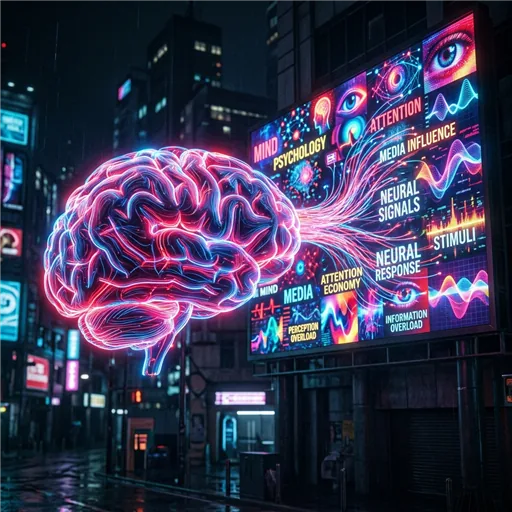
On YouTube, the video title is the ultimate weapon. In a platform delivering billions of algorithmically ranked results, a single line of text determines whether a meticulously produced video attracts millions of viewers or drifts silently into obscurity. Writing effective titles is notoriously difficult — just when a creator thinks they have landed the right words, the second-guessing begins. Will it resonate? Will it compel a click?
The difference between a click and a scroll-past often comes down to a handful of carefully chosen words. Understanding exactly which words those are — and why — requires a look at the psychology operating beneath the surface of every viewer's decision.
The Subconscious Mind and Emotional Triggers
Research suggests that roughly 95% of human decisions are made subconsciously. Choosing to watch a YouTube video costs no money, but it does cost time — and that commitment is still a largely subconscious act. Creators who understand this write titles aimed at the feeling a topic produces, not merely its description.
Once a creator maps the emotional landscape of their niche, the right words follow naturally. A finance creator reaches for "lucrative" and "profitable" rather than "good" or "useful." A travel creator chooses "breathtaking" over "nice." The goal is to reliably trigger one of three primal responses that drive clicks: burning curiosity, deep-seated fear, and overwhelming desire. A well-stocked vocabulary of emotive words — "fierce," "easy," "daring," "luxurious," "best-selling," "blissful," "competitive" — gives creators the raw material to pull those levers deliberately.
The Architecture of Curiosity
Curiosity is not a fleeting emotion; it is a powerful psychological catalyst. Humans are hardwired to seek answers. When a title poses a question — or subtly implies one — it creates what behavioral psychologists call a "knowledge gap": a nagging sense that valuable information exists just out of reach. That cognitive itch can only be scratched one way: by watching the video.
The real trick is pairing the knowledge gap with an emotional charge. Compare the flat instructional title "How to Make Pizza" with the provocative "Why Does This Pizza Recipe Upset Chefs?" The latter raises a culinary question and introduces conflict, making it far more compelling. Similarly, "The Untold Secret of the Mona Lisa" works because it combines factual mystery with historical intrigue. The best curiosity-driven titles evoke complex feelings — not just a sterile query — turning a simple click into an emotional commitment.
Structural Frameworks for High-Performing Titles
Beyond emotional triggers, two proven structural frameworks consistently elevate titles from ordinary to irresistible.
1. Combining Unrelated Elements
Juxtaposing concepts that do not typically belong together creates immediate surprise and curiosity. A title like "What if Einstein Was a Chef?" works precisely because it collides two entirely separate worlds — theoretical physics and culinary arts — into a single, jarring premise. This approach breaks the predictable pattern of what viewers expect to see in their feed, challenges their assumptions, and compels them to find out how the creator bridges the gap.
2. Bridging the Known and the Unknown
This framework connects something unfamiliar with something the target audience already knows and loves. "How 'Game of Thrones' Predicted Modern Politics" is a textbook example: it links a globally recognized fantasy series to complex real-world topics, making the video instantly appealing to multiple distinct audiences. To apply this framework effectively, creators need a deep understanding of their viewers' baseline interests and cultural touchstones. The title acts as an intellectual bridge, guiding audiences comfortably from the familiar into entirely new territory.
Shared Lingo and Audience Connection
Relatability is a sociological superpower. A video title initiates a parasocial conversation, and using the specific language of a community signals instant membership. Consider the title "This Talking Pitbull Is Smarter Than You Can Imagine!" from the animal channel Zeusy the Pitty. Anyone who knows pit bulls understands exactly how vocal and expressive the breed is — the phrase "talking pitbull" is a knowing nod to that community. For the right audience, it feels less like a title and more like an inside joke.
Community language — "Doggo," "Hooman," "Zoomies," "Boop the snoot" — builds camaraderie before the video even begins. Creators who learn their niche's vernacular and weave it naturally into titles consistently outperform those who default to generic, broadly accessible phrasing.
Deconstructing Real-World Case Studies
Abstract principles become concrete when tested against titles that have already captured millions of viewers.
The Unexpected Twist
"I Trained Like a NASA Astronaut for 30 Days" — pairs the mundane (a fitness routine) with the extraordinary (NASA access), promising a unique behind-the-scenes journey most viewers could never experience themselves.
Tapping into Trends
"How TikTok is Changing the Music Industry" — hijacks the momentum of a high-interest topic and connects it to a broader cultural narrative, promising insider analysis of an ongoing shift.
Provoking Thought and Debate
"Why the 5-Day Work Week is Outdated" — directly challenges a universal norm. By staking a controversial position, it sparks debate and attracts viewers on both sides of the argument.
Personal Stories with Universal Appeal
"The Mistake That Cost Me My YouTube Career" — combines personal drama with universal themes of failure and learning. Human empathy makes it almost impossible to scroll past.
Technical Optimization and SEO
Psychological mastery alone is not enough. The best creators also treat their title as a technically optimized asset. If viewers are not actively searching for a given type of content, a brand-new creator will struggle to get traction regardless of how compelling the title sounds. Thorough keyword research — studying competitor phrasing, identifying high-volume terms with low to medium competition — must happen before the upload button is pressed.
Character Limits
YouTube's hard maximum is 100 characters, but using the full allowance is widely considered a mistake. Platform data consistently shows that the highest-performing titles land between 60 and 70 characters — long enough to communicate the full value proposition, short enough to display cleanly on both mobile and desktop without truncation.
The Power of Numbers
Incorporating numerals into titles is a principle as old as copywriting itself, and it still works. A landmark 2007 eye-tracking study by researcher Jakob Nielsen found that visible numbers involuntarily stop the scanning eye, even when embedded in a dense wall of text. Numbers carry an implicit authority — they signal hard facts, specific promises, and measurable outcomes — making a title feel more credible and concrete than its word-only equivalent.
The Symbiosis of Visuals and Text
A psychologically perfect, SEO-optimized title is worthless if it fails to work in concert with its thumbnail. No YouTube title exists in isolation — it always appears directly alongside the video's preview image. Treating the thumbnail as an afterthought at the end of production is one of the most common and costly mistakes creators make.
The thumbnail catches the wandering eye. The title hooks the analytical mind. Both must tell the same story.
When the two elements are aligned, the synergy is immediately felt: a thumbnail showing a perplexed, raw facial expression paired with "Why I Said No to a Million Dollars" creates an irresistible, cohesive narrative. When they contradict each other, the result is viewer disappointment, high bounce rates, and lasting damage to channel trust.
The Perils of Clickbait and Deception
In the aggressive pursuit of clicks, the temptation to over-promise is constant. Sensational, misleading titles do attract curious viewers in the short term — even skeptical viewers click just to confirm a premise is as absurd as it sounds. But YouTube's algorithm actively penalizes misleading metadata by suppressing the video's reach, and the platform's guidelines explicitly prohibit using deceptive titles or thumbnails to trick users.
The calculus is straightforward: a misleading title might win one click, but it destroys the long-term trust required to build a loyal audience. If a creator titles a video "Buying a Mansion for $1 Million" and simply drives past expensive houses with no genuine intent or content to deliver, that is punishable clickbait. The only sustainable approach is to balance intense curiosity with honest credibility — making a compelling promise, then fully delivering on it. Titles must also remain brand-safe, steering clear of profanity, hate speech, and misinformation that violate community guidelines.
Artificial Intelligence and Ideation
Creators no longer have to rely solely on their own brainstorming when inspiration runs dry. AI-powered title generators, trained on large datasets of historical click-through rates, semantic search volumes, and proven trigger words, can produce dozens of optimized options from a single video description in seconds. When a creator hits a creative wall, these tools offer fresh angles and data-backed framings that an exhausted human mind might miss entirely.
Equally valuable is the practice of studying top-performing channels within a niche. Identifying which titles drove viral traction — and adapting proven templates like "I regret..." or "The truth about..." — allows creators to tap into existing audience demand rather than guessing from scratch.
The Micro-Ecosystem of YouTube Shorts
The rise of short-form vertical video has introduced a new set of constraints that make effective titling even more demanding. Shorts feeds move fast, and the viewers scrolling through them move faster. The same psychological principles apply — curiosity, shared lingo, emotional triggers — but the execution must be near-instantaneous.
The 40-character rule. While long-form titles have a practical sweet spot of 60–70 characters, YouTube Shorts truncate titles aggressively on mobile. Creators have only 40 characters before the interface cuts off the headline. Every word must earn its place: a crisp hook, a relevant keyword, and enough intrigue to stop the thumb mid-scroll.
Highly relevant keywords remain essential for Shorts, since they surface directly in standard YouTube search results alongside traditional videos. A trending, well-crafted title can help a new Short ride algorithmic momentum well beyond the Shorts player and into broader discovery.
The Art and Science of the Perfect Title
Writing high-performing YouTube titles is equal parts psychology and engineering. It demands an understanding of the subconscious emotional triggers that drive human behavior, the structural frameworks that turn an ordinary headline into an irresistible one, and the technical discipline to respect character limits, keyword data, and thumbnail alignment.
Mastery does not arrive overnight. But creators who consistently practice these principles — triggering genuine curiosity, deploying community language, grounding titles in honest SEO, and ensuring every headline works in lockstep with its visual — give their videos the best possible chance of being seen. In a platform built on attention, the title is not decoration. It is the product.